
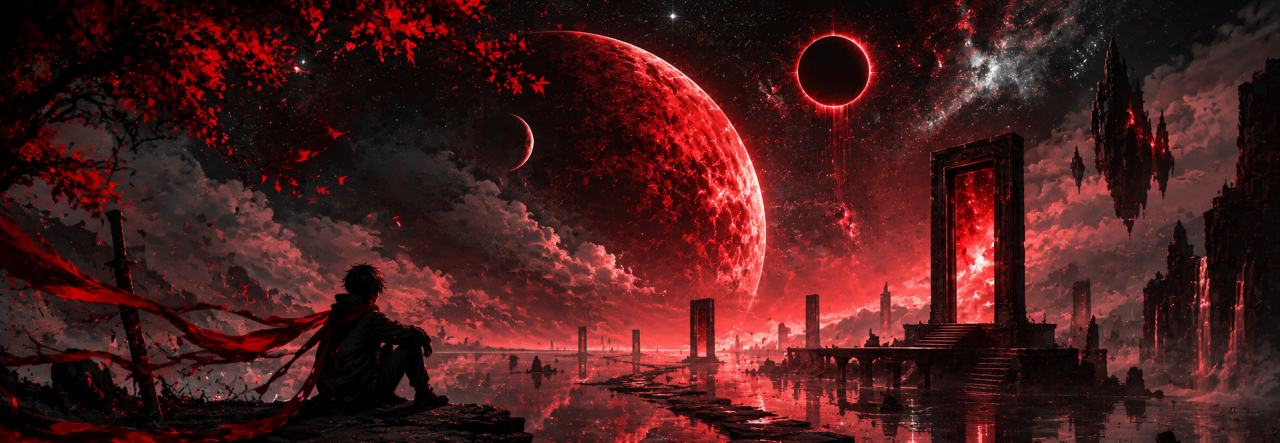
The Zombies Know Who Not To Touch
Content note: This post discusses darker implications of BO7’s endgame, including environmental storytelling around civilian deaths and implied harm. Reader discretion advised.
There was a moment in Endgame BO7 where my duo and I stopped talking.
Not because we were overwhelmed — we were used to being swarmed — but because something didn’t sit right anymore.
The zombies weren’t attacking everyone.
They were only attacking us.
As we moved through the open world, fighting contracts, clearing areas, pushing deeper into higher combat zones, a pattern started to form. Guild members could stand in infected areas, patrol through chaos, occupy checkpoints and strongholds — untouched.
Meanwhile, we were being hunted.
Not passively.
Not occasionally.
Relentlessly.
The difference became impossible to ignore in Zone 3 — the golf course.
That place doesn’t breathe. It suffocates.
Zombies spawn constantly. High-value targets stack on top of each other. There’s no sense of escalation or pacing — just pressure. Endless pressure. You clear one group and another is already rushing in. It doesn’t feel like the game ramping up difficulty. It feels like a space designed to never let up.
Zone 3 isn’t the strongest combat zone.
Zone 4 is.
Zone 4 hits harder, punishes mistakes faster, and demands better gear by design. But Zone 3 feels different. It isn’t about being overwhelmed by power — it’s about being worn down by presence. Density without relief. Aggression without warning. A place where the infected don’t surge so much as persist.
If Zone 4 is a battlefield, Zone 3 feels like exposure.
Like a place where something went wrong and was never fixed.
Or worse — a place where things were never meant to be fair.
A testing ground.
And still, the Guild moves through the world untouched.
That’s when my duo asked a question that landed heavier than any boss fight.
“Have you noticed there aren’t any kids?”
No child zombies.
No infants.
No small bodies among the infected.
Once you see it, you can’t unsee it.
Endgame never addresses this. It doesn’t frame it as a mystery or a tragedy. It just leaves the absence there, unspoken. But absence is still storytelling.
If the serum the Guild spread truly took control of the population, then what happened to the children?
They didn’t turn.
Which leaves only darker possibilities.
Maybe the infection didn’t take hold in them — and they were torn apart in the chaos before they ever could. Maybe families tried to evacuate through Guild checkpoints and were stopped. Maybe the Guild decided that anyone who couldn’t be controlled couldn’t be allowed to live.
We already know civilians were executed at evacuation points.
We already see bodies hung, stacked, lined up as warnings.
We already know zombies don’t attack the Guild.
The game never says the words.
It doesn’t need to.
BO7’s Endgame doesn’t give you a villain monologue. It gives you patterns. It gives you silence. It gives you unanswered questions that only appear if you stop playing it like a checklist.
The zombies know who not to touch.
The world knows who holds power.
And the missing voices — the ones that should be there — tell the loudest story of all.
This isn’t just survival.
It’s aftermath.
And Endgame lets you walk through it without ever asking if you’re ready to understand what you’re seeing.


This post lingers in the best and most unsettling way. What you’re describing goes beyond difficulty curves or game mechanics—it’s environmental storytelling doing quiet, brutal work. The realization that the zombies *choose* who to attack reframes the entire experience, turning familiar chaos into something deliberate and controlled. Zone 3 especially reads less like a challenge space and more like a wound in the world, a place where balance was never part of the design.
The absence of children is what truly sharpens the horror. It isn’t explained, justified, or even acknowledged, and that silence forces the player to fill in the gaps themselves. When a game refuses to answer a question that heavy, it stops being entertainment and becomes confrontation. As you point out, patterns can be louder than exposition—and once you notice them, you’re no longer just surviving the world, you’re implicated in it.
It makes me wonder: at what point does “endgame” stop being about mastery and start being about witnessing consequences? If the Guild is protected, what does that say about control versus humanity? And if the game never asks whether we’re ready to see these implications, is that an intentional choice—or a mirror held up to how often we move through systems without questioning who was erased to make them work?
LikeLiked by 1 person
Thank you for reading it this closely. You’re exactly right—once the behavior stops feeling incidental and starts feeling deliberate, the entire space changes. What was chaos becomes pattern, and pattern implies choice.
Zone 3 really does feel like a wound rather than a challenge. Not a place meant to be beaten, but endured. And endurance without resolution is its own kind of message.
The absence of children is where the game stops offering distance. There’s no framing, no justification—just a gap the player is forced to sit with. At that point, interpretation isn’t optional. You either notice it, or you move past it, and both choices say something about how we engage with systems like this.
I think your question about endgame is the right one. Mastery feels incomplete here because the world doesn’t respond to it the way we expect. The game never asks if we’re ready to see the consequences—it just keeps going. And maybe that’s the point: how often do systems function the same way, relying on silence and momentum to keep us from asking who paid the cost.
I appreciate you taking the time to witness it alongside me.
LikeLiked by 1 person