
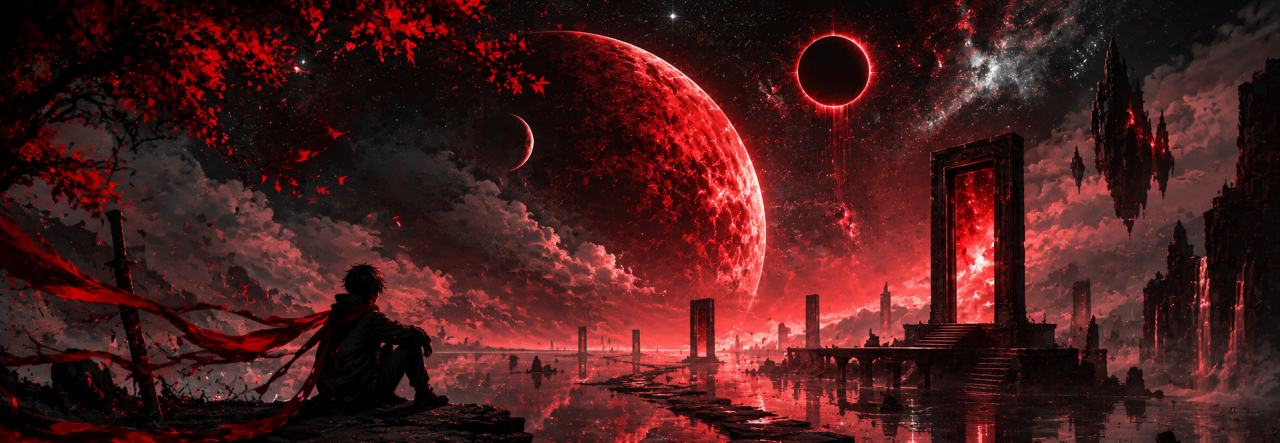
To exist here is not just to feel—it is to bear witness, to navigate the pulse of a universe that knows you intimately.
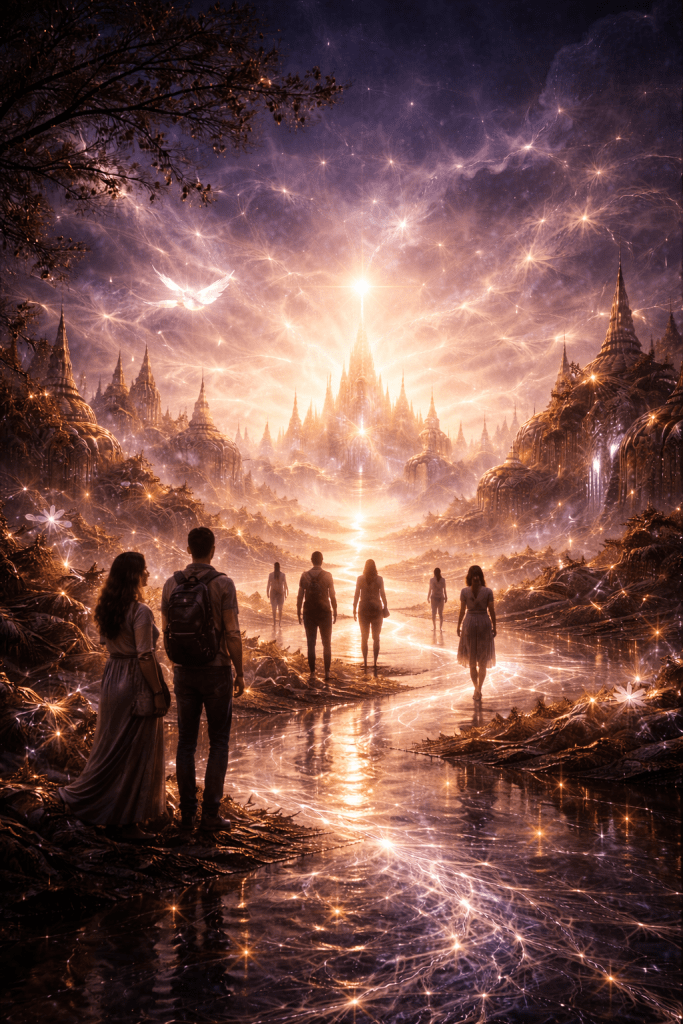
They arrive slowly, tentative, carrying hearts that beat in fragile synchrony with the rhythm of the cosmos. Each footstep writes a story on the dust of cities built by joy, on the edges of shadows shaped by sorrow, across landscapes jagged with anger and trembling with love. Humans do not command this world. They respond to it. They adapt, falter, grow.
Some linger in light, absorbing warmth from joy’s spires, their laughter weaving new threads of gold into the fabric of being. Others step into shadow, learning patience from sorrow, understanding the weight of loss and the depth of memory. Each encounter leaves a mark: a whisper of presence, a tremor in air, a reflection in molten rivers.
Love is their teacher, fear their companion. Hope lifts them, anger challenges them. Nothing is static. Nothing is safe. To walk here is to constantly negotiate with forces beyond comprehension, yet intimately familiar. And in this negotiation, they discover a truth: to witness fully is itself an act of creation.
Even in failure, in trembling, in the quietest moments of despair, humans contribute to the architecture of this world. Each decision, each heartbeat, each act of attention threads the cosmic loom. To observe is not passive. To exist is participatory.
And when they leave, the pulse remains in them, echoing through time and memory, carrying the weight of everything they have felt and witnessed.
In the world born of feeling, humans are not masters, nor mere inhabitants—they are witnesses, storytellers, and silent architects of the universe itself.
 The Cozy Nook | Stories · Food ·Gaming·Magic
This reads like a reminder that being human isn’t about control — it’s about participation. What I hear in your words is the idea that we’re not here to dominate the world or fully understand it, but to move in relationship with it, learning from both joy and sorrow as equal teachers. There’s something humbling and beautiful in that perspective.
I really like the way you frame witnessing as creation. It suggests that simply paying attention — feeling deeply, noticing honestly — shapes reality just as much as action does. That makes even the quiet or painful moments meaningful, because they become part of the larger story being woven.
The balance between light and shadow also feels important here. You don’t treat them as opposites to escape or chase, but as necessary experiences that refine us. Love, fear, hope, anger — all of them become tools for growth rather than flaws to eliminate.
And the ending stayed with me: humans as witnesses and silent architects. It implies that our influence isn’t always loud or obvious, but it’s constant. Every choice, every feeling, every story we carry leaves an imprint. It’s a deeply compassionate view of humanity — one that acknowledges our fragility while honoring the quiet power of simply being present and engaged with the world.
LikeLiked by 1 person
Thank you for reading it with this kind of care — it feels like you stepped into the pulse of it with me. Your line about participation is exactly the heart of what I was circling: that being human isn’t about mastery, but relationship. Moving with joy and sorrow instead of trying to outrun either of them.
I’m really glad the idea of witnessing as creation resonated with you. I keep coming back to the thought that attention itself is a form of shaping — that what we choose to feel and see leaves a real imprint. It makes even the quiet or painful spaces feel purposeful rather than empty.
And I love how you named the balance between light and shadow as refinement rather than opposition. That’s such a generous way to hold the human experience. Fragile, imperfect, but still quietly powerful in its presence.
Your reflection adds another layer to the world for me. Thank you for meeting it there and sharing what you heard in it.
LikeLiked by 1 person