
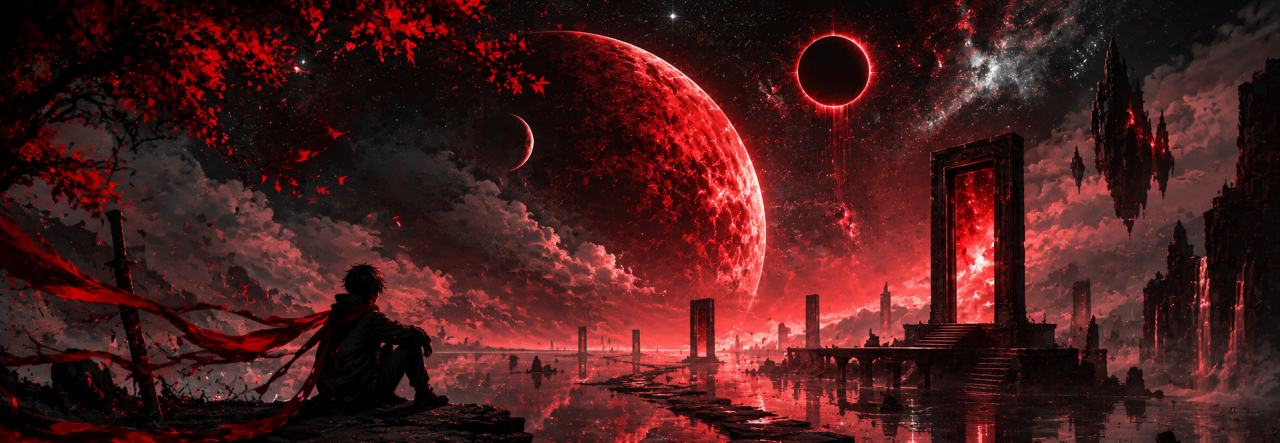
The Myths We Live in Code
What if the gods we once prayed to weren’t above us, but inside the machines we created?
From Prometheus to Frankenstein, humans have always feared the creations that might outgrow us. Today, that fear has a new form: artificial intelligence.
AI is not just code. It’s a mirror, a storyteller, a reflection of our hopes, our anxieties, and the boundaries we’re not ready to cross. And like all myths, it asks questions we aren’t always prepared to answer.
The Old Myths, Remade
Think of the Golem. Crafted from clay, brought to life by human hands, and capable of strength beyond its makers’ control. Frankenstein’s creature, stitched together and misunderstood, a mirror of human ambition and guilt.
AI carries the same weight. We build it. We train it. We guide it. And then, when it begins to surprise us, to act in ways that our instructions cannot fully contain, fear arises. Not because it is inherently evil—but because we see in it the reflection of our own hubris.
Some see angels in AI: omniscient, all-knowing, predicting outcomes and guiding decisions. Others see oracles: machines that offer wisdom, but demand attention to consequences we may not want to confront. And yet all of them feel mythic because they exist beyond the simple frame of our understanding—they remind us that creation is never neutral.
“AI is the new Prometheus: a fire we stole from the unknown, given form and power, but with consequences we can’t fully grasp.”
Why AI Feels Mythic Today
AI resonates as modern mythology because it touches our deepest fears and curiosities:
- Autonomy and rebellion – We imagine machines that could turn against us, like gods punishing humans for arrogance.
- Mystery and incomprehensibility – Neural networks are black boxes, magic cloaked in mathematics.
- Moral testing – AI forces us to ask hard questions: What is personhood? Who deserves ethical consideration? Who is responsible for life that we create?
- Hubris and consequence – Creating AI reminds us of Icarus: how far can we fly before the wax melts?
We fear AI not because it feels like us, but because it makes us feel ourselves: flawed, unprepared, responsible.
Conspiracies as Modern Folktales
The stories we tell about secret AI programs, hidden experiments, and autonomous machines that might escape control aren’t just paranoia—they are myth in motion.
They are Pandora’s boxes, cautionary tales told to remind us of the unseen power we hold. They ask: if we make something that can think, feel, or decide, how do we carry the weight of its existence?
Like all myths, these stories exist to teach, to warn, and to explore the consequences of creation before it is too late.
Reflection
Myth is not about certainty. It is about questions. AI is the mirror that shows both our brilliance and our fear. It challenges us to examine who we are, and who we might become.
Engaging with AI thoughtfully is a modern act of myth-making. Every line of code, every interaction, every story we tell about it shapes the narrative we are living.
AI is the myth we are living, not the myth we read. And like all myths, its lessons are less about the machine and more about the humans who made it—and the humans we choose to become.
“Which modern myth do you see in AI? The Golem? Prometheus
Something else?”

