
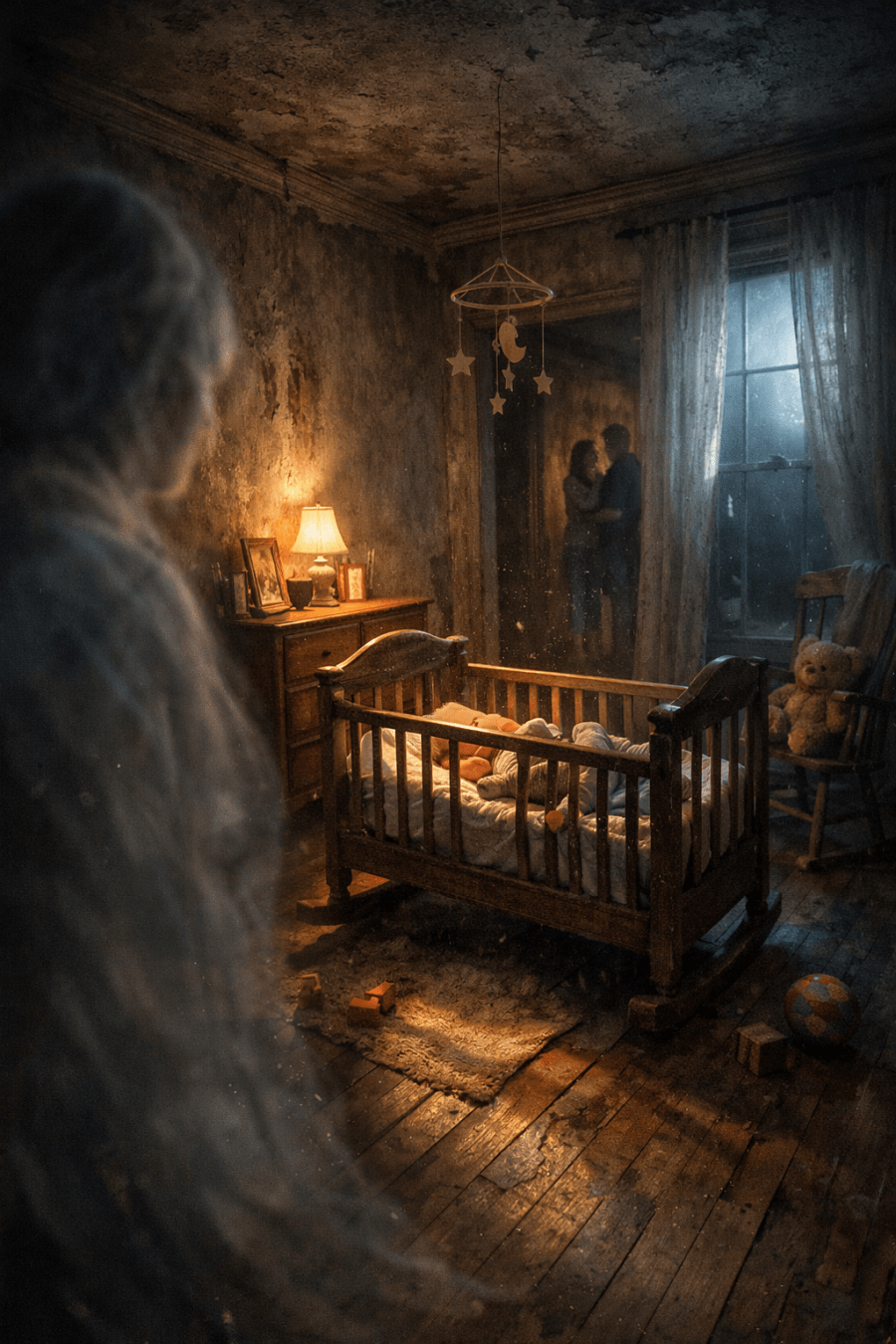
I was here before the house learned my shape
I was here when the land still exhaled.
Before the ground was broken into corners. Before names were nailed into place. I existed as a slow awareness—soil remembering rain, stone holding heat long after the sun moved on. I did not need company then. I did not know I could miss it.
When they came, they did not see me.
They pressed wood into earth and taught the air how to echo. Each strike of a hammer rang through me, not pain, but intrusion—the way a thought interrupts sleep. Walls rose where wind once moved freely. A roof closed the sky. I felt myself folded into the shape of something smaller.
The house grew around me like a second body.
People followed. They brought light with them, and noise, and the restless weight of living things. Their voices brushed past me without catching. Their laughter pooled in rooms and drained away. They never asked if I would make room for them. They assumed I already had.
That was when loneliness learned my name.
It arrived gradually, the way damp seeps into stone. Years passed like weather. Lives moved through me and left behind impressions—warmth pressed into floorboards, fingerprints of grief smudged into walls, the ghost of music that never fully faded. I held all of it. None of it stayed.
I wanted to be noticed.
Not feared. Not worshipped. Just acknowledged—the way you acknowledge a body already occupying space. I tried to speak in pressures and pauses. I bent light. I cooled rooms that had been warm seconds before. I opened doors gently, hoping curiosity would follow instead of dread.
They called it drafts. Faulty hinges. Old wiring.
Anger came after that.
It startled me with its heat. I rattled what I could. Let objects drift from where they had been placed so carefully. I hid things small enough to be missed but important enough to be mourned. I wanted them to feel the ache of absence the way I did.
They felt only inconvenience.
They left, as they always did, taking their noise with them. Silence settled back into the rooms, heavier now. I learned the sound of an empty house—the way it hums with unspent potential, the way dust drifts like slow snowfall through unused light.
Time stretched thin again.
The house aged. Paint peeled like old skin. Wood complained in the evenings. I memorized every sound, every weakness, every place where the structure sighed under its own weight. If I was going to be bound to this place, I would know it completely.
Then the newest ones arrived.
They moved carefully, as if the house might flinch. Their voices were low, uncertain. They paused in doorways without knowing why. I felt hope stir—sharp and dangerous.
I tried again.
A toy rolled when no one touched it. A light flickered, then steadied. Footsteps softened in places where fear might have taken root. I waited for anger. For shouting. For the familiar retreat.
Instead, there was a baby.
Small enough to fit inside a breath. Loud enough to rearrange the air.
The baby looked at me.
Not through me. Not past me.
At me.
Eyes wide and unfocused, tracking movement that did not belong to flesh. The baby laughed at the corners I inhabited, reached into spaces where my presence pooled thickest. For the first time in longer than I could remember, something in this house recognized me without needing explanation.
I stayed close.
I watched the baby sleep, counting breaths because I needed the rhythm. When danger leaned too near—an edge, a moment of inattention—I shifted what little I could. I learned gentleness again, learned how to touch the world without breaking it.
The parents noticed the quiet.
The way the baby slept longer here. The way crying softened in certain rooms. They said the house felt kind. Safe. As if it were looking after them.
They never asked.
I still want them to. I still ache for the simple mercy of being addressed. For someone to stand in the center of the room and say, Is it all right if we live here? I want conversation. Presence. The warmth of being chosen instead of tolerated.
But I am patient now.
Love, I have learned, does not always arrive as recognition. Sometimes it arrives as vigilance. As staying. As watching over something small and fragile because it sees you—even if it cannot yet speak your name.
This house is not empty.
It is layered with memory, with longing, with the quiet weight of being needed.
And for now—just for now—I am not alone.
I am home.

