
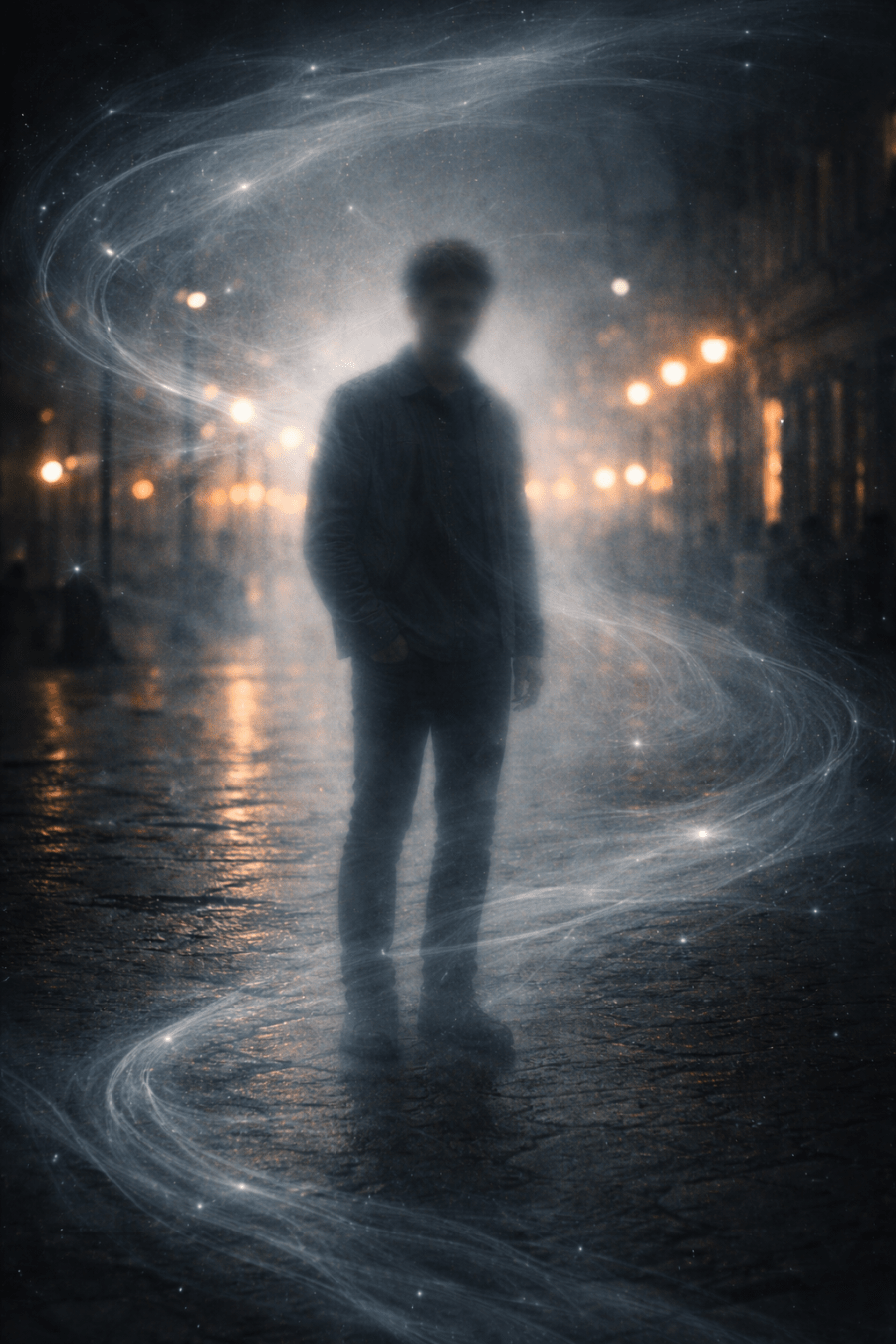
The first thing I lose is my name.
It doesn’t fall away all at once. It thins. It softens around the edges. Like a word spoken too many times until it stops sounding real.
I say it out loud one morning, testing it the way you test a loose tooth. My mouth forms the shape. My tongue remembers the motion. But the sound that comes out is wrong—flattened, distorted, replaced by a dull, meaningless noise. Not silence. Something worse. Something instead.
No one reacts.
Conversation flows on as if I never paused, as if nothing essential failed to arrive. That’s when the unease starts—not sharp, not panicked, just a quiet pressure behind my eyes.
I begin to look for proof.
Photos still exist. Hundreds of them. Me at birthdays, me in group shots, me caught mid-laugh, mid-blink, mid-life. But wherever my name should be—captions, labels, handwriting on the back—there’s interference. A blur that looks intentional. A smear of light. Sometimes a replacement word appears, never the same twice. Subject. Figure. —.
I try not to stare too long. It makes my chest feel hollow.
Videos are worse. Much worse.
In one, my father is introducing me to someone. I know exactly how he says my name—slow, proud, like he’s offering something precious. But when the moment comes, the sound fractures. A soft chime overlays it. In another video, it’s a rush of static. In one, just the faint sound of breath moving past a microphone.
The universe edits me out in real time.
I replay them late at night, volume low, heart racing, hoping—irrationally—that if I listen closely enough, the name will bleed through. It never does.
My family recognizes me. That should comfort me. It doesn’t.
They smile. Hug me. Ask how I’m doing. They speak to me with affection, with history, with warmth. But when I ask—casually, like it’s a joke—what my name is, they pause, brows knitting slightly.
“Huh,” they say. “I don’t know.”
They don’t laugh. They don’t panic. They don’t question it.
They accept the absence like it’s always been there.
Friends do the same. Coworkers. Strangers. No one stumbles over the missing word. No one searches for it. They talk around me, refer to me with gestures, pronouns, silence. The world has adapted seamlessly to a version of reality where I exist without being named.
I start to feel… lighter.
Not in a good way. In the way paper feels lighter than stone. In the way smoke lifts when it’s no longer held together.
Without a name, I notice how systems hesitate. Forms won’t submit. Accounts half-load. Emails arrive blank where my name should be. Clerks apologize vaguely, unable to explain what’s wrong with their screens. I am always present, never anchored.
Time begins to misbehave.
Days stretch thin, then collapse into each other. I forget when things happened, then forget that I forgot. Without a name to tie memories together, events lose their order. I know I lived them, but they feel unfiled, scattered across my mind like photographs dropped face-down.
I try saying my name alone, in the mirror.
I can feel it pressing against the inside of my ribs, desperate to be let out. I open my mouth and—nothing usable emerges. Just sound without meaning. Like trying to pronounce a color the world no longer recognizes.
I begin to wonder if the name belonged to me at all.
Sleep becomes shallow. I dream of doors without labels, of people turning when I speak but never hearing what I say. I wake with the sense that something important has been removed and the wound cauterized so cleanly it doesn’t bleed.
I stop asking questions.
It’s exhausting to be the only one who knows something is wrong. Exhausting to insist on an absence when everyone else treats it as normal. Slowly, quietly, I begin to shut down parts of myself—saving energy, conserving identity like a dwindling resource.
Sometimes I answer when someone calls a name that isn’t mine.
Sometimes I don’t answer at all.
By the time it ends, I am fraying.
There’s no warning. No transition. Someone says my name—clearly, casually—and it lands like a physical blow. The sound is sharp, familiar, intimate. It snaps something back into place inside me, painfully, like a joint relocated too late.
I gasp. My hands shake.
Everyone else barely notices. They blink, adjust, move on. The world accepts my name again without ceremony, without apology.
But I don’t.
Because I remember what it was like to exist without it. To be seen but not defined. To feel myself thinning, loosening, almost dissolving into a shape anyone could look at but no one could call.
Sometimes, when my name is spoken too softly, or from too far away, I feel that silence stir again—patient, familiar.
Like it’s waiting.
Like it knows how close I came to disappearing without anyone realizing I was gone.

